
-
Bank-funded slot play is legal in Nevada
-
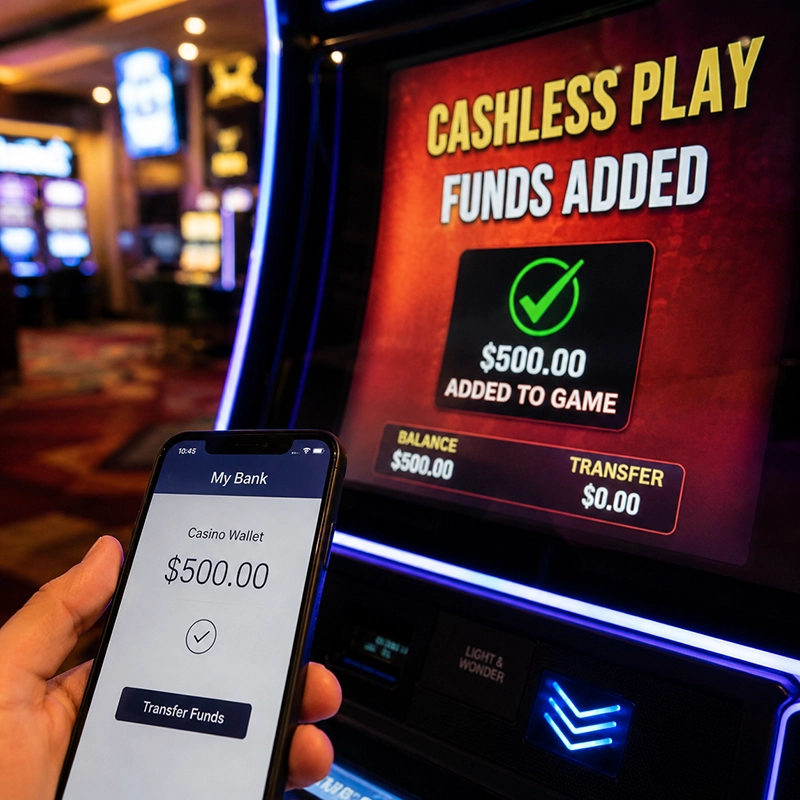
Money moves via a digital casino wallet
-
UK tourists generally can’t use these systems
For decades, playing a slot machine in Las Vegas was simple. You put cash into the machine, played your games and, if you had anything left at the end, pressed cash out and received a ticket.
But Las Vegas has experimented with something considerably more controversial: allowing players to electronically fund their gambling without going to an ATM or putting cash into the machine. At Resorts World Las Vegas, players are able to fund a cashless gambling account using a bank card, online banking or PayPal account and then use those funds to play slot machines.
For anyone used to playing physical slot machines in the UK, that sounds quite remarkable. And it isn’t a loophole. Nevada specifically regulates this type of gambling.
However, there’s an interesting twist. In 2026, Resorts World announced that it was phasing out the very cashless wagering system that helped introduce the concept to the Las Vegas Strip. So what happened?
Nevada Law Actually Allows Electronic Funding of Slot Machines
Nevada law specifically defines a “cashless wagering system”. The definition includes computerised systems capable of facilitating electronic transfers of money directly to or from a game or gaming device.
Nevada law also defines a “debit instrument” as a card, code or other device through which somebody can initiate an electronic transfer of money to a game or gaming device. So this isn’t simply a casino finding a clever workaround; Nevada has created an actual regulatory framework for the technology.
There is, however, an important restriction concerning credit cards. Nevada Revised Statutes 463.3557 states that an electronic transfer of money from a financial institution directly to a game or gaming device cannot be made using a credit card, subject to an exception for interactive gaming. Debit-based transactions and approved cashless wagering systems are treated differently.
The best Las Vegas example is Resorts World. The casino introduced GamingPlay, powered by Play+, which allows eligible players to create a cashless account.
According to Resorts World’s information about the service, the account can be funded using a bank card, online banking or PayPal account. Once funded, the money can be used for slots, table games and digital sports betting.
Rather than withdrawing $500 from an ATM, putting five $100 notes into a machine and then receiving a paper ticket afterwards, a player can manage gambling funds electronically. The system effectively creats a digital casino wallet between the player’s source of funds and the casino games.
You Don’t Literally Put Your Debit Card Into the Slot
This is an important distinction. When people hear “fund a slot machine from your bank account”, they might imagine inserting a debit card into the machine and selecting $500. That’s not really how these systems work.
There is normally an intermediary cashless wagering account. The player transfers money into that account and can then access the balance while playing compatible casino games.
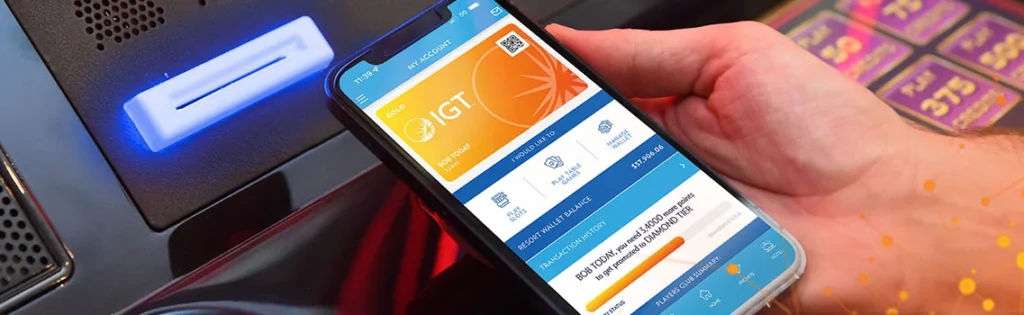
Gaming technology company IGT developed a similar system called Resort Wallet. Its technology allows players to maintain a Cashless Wagering Account and transfer funds onto compatible slot machines. IGT also developed an external funding system called IGTPay, which can allow the wagering account to be funded from sources including bank accounts, debit card accounts and electronic wallets.
The result from the player’s perspective can nevertheless be remarkably similar:
Money in your bank → digital wagering account → credits on a slot machine.
Nevada Built Responsible Gambling Controls Into the System
Nevada regulators clearly recognised the potential problems associated with making access to gambling funds this easy. Nevada’s technical standards require certain cashless wagering systems involving debit instruments to provide daily monetary transfer limits and allow players to establish their own daily limits.
Perhaps more importantly, if a player decides to increase their personally established limit, the system must impose a delay of at least 24 hours before the increase takes effect. Responsible gambling information must also be displayed.
Those requirements are significant because they address one of the obvious criticisms of cashless gambling: if obtaining more gambling money becomes too easy, players potentially lose the natural break created by having to physically obtain more cash.
Imagine you’ve decided to gamble $300 during an evening in Las Vegas. You take $300 onto the casino floor and eventually lose it.
If you’re using cash, that’s a very obvious moment. Your money is gone and, if you want to continue playing, you have to make another decision. You might need to leave the machine, find an ATM, put your bank card into it, request another withdrawal, pay the extortionate banking fees, collect the money and then return to the casino floor.
There’s friction in that process, and that isn’t necessarily a bad thing when gambling is involved.
Now imagine your bank-funded casino wallet is accessible electronically. Moving another amount into your gambling balance can potentially be considerably easier. Anyone who regularly uses contactless cards or mobile payments will probably recognise the psychological difference: tapping a screen doesn’t always feel quite the same as physically handing over several banknotes.
When you’re gambling, that distinction arguably becomes much more important.
But There’s a Big Twist: Resorts World Is Phasing It Out
This is perhaps the most interesting part of the story. Resorts World Las Vegas opened in 2021 and became the highest-profile example of cashless casino gambling on the Strip.
However, in March 2026, Resorts World President and CFO Carlos Castro told Nevada gaming regulators that the casino was phasing out its cashless system and would re-evaluate the technology in the future.
The casino was effectively moving back towards the familiar model of putting money into a slot machine and receiving a TITO – Ticket In, Ticket Out – voucher when cashing out. Reports in May 2026 described Resorts World’s withdrawal as leaving the Las Vegas Strip without a casino offering this type of full cashless wagering system.
That’s quite a turnaround. Las Vegas spent years talking about cashless gambling as part of the casino industry’s future, only for its most prominent Strip implementation to be withdrawn.
This is particularly relevant to UK players visiting Las Vegas. Even when Resorts World’s GamingPlay system was available, you couldn’t necessarily arrive from Britain, connect your UK bank account and immediately start transferring money onto slots.
Resorts World’s published GamingPlay information stated that enrolment required a player to be at least 21 and either a US citizen or legal permanent resident.
That’s an important distinction. The technology and Nevada regulations make bank-funded cashless slot gambling possible, but that doesn’t mean every tourist can use every system. Casinos, payment providers and banks can impose their own eligibility and payment requirements.
So if you’re visiting Las Vegas from the UK, don’t assume you’ll be able to connect your British current account or debit card to a casino wallet simply because Nevada law allows cashless wagering.
So Can You Currently Fund a Las Vegas Slot Machine From Your Bank?
The most accurate answer is that Nevada allows technology that can make this possible, but it isn’t currently the normal way to play slots in Las Vegas.
Cashless wagering systems can electronically transfer funds to gaming devices, and systems have existed that allow casino wagering accounts to be funded through bank accounts and debit cards. However, the most famous Las Vegas Strip example – Resorts World’s GamingPlay system is being phased out in 2026.
For the average British tourist visiting Las Vegas today, you should therefore expect the traditional system:
Is Cashless Gambling the Future – Or Did Vegas Go Too Far?
Cashless gambling makes perfect sense from a technology perspective. People increasingly expect to pay for almost everything using their phones and many rarely carry significant amounts of cash. Casinos understandably don’t want gambling to be one of the few remaining activities where customers have to find an ATM first.
But gambling isn’t the same as buying a coffee.
Removing friction from payments can also remove some of the moments when a player might otherwise stop and reconsider how much they’re spending. The fact Nevada requires configurable spending limits and a 24-hour delay before increasing certain player-selected limits shows that regulators have at least recognised that concern.
At the same time, cashless systems aren’t automatically bad for responsible gambling. Digital accounts can provide players with clearer transaction histories and potentially better tools for monitoring how much they’re spending. Much depends on how the technology is designed and used.
The fact that Resorts World – the Las Vegas casino that made cashless gambling one of its headline technological features – has now stepped back from the system makes the whole experiment particularly interesting.
The technology exists. Nevada allows it. You really can build a system where money moves electronically from a bank-funded account onto a physical slot machine.
But, at least for now, Las Vegas appears to have discovered that persuading gamblers to abandon cash and casino tickets isn’t quite as straightforward as expected.