
Another 10 Amazing Slot Machine Facts!
#1 Slot Fact: The One-Armed Bandit Lever
The famous lever on the side of early slot machines is what gave them the nickname “one-armed bandits.” Long before digital buttons and touchscreens, slots were fully mechanical devices, and the lever was essential to make the internal gears spin. When a player pulled the arm, it physically released a spring-loaded mechanism that set the reels in motion. These early machines — starting with Charles Fey’s designs from the late 1800s — relied entirely on clockwork engineering, so the lever wasn’t just for show; it was the core of how the machine operated.
The “bandit” part of the nickname came from the machines’ reputation for taking players’ money far more often than paying it back. With no regulations, wide variation in payout levels, and many machines set to extremely low returns, they were notorious for “robbing” players — and doing it with just one arm. By the 1960s and 70s, the term “one-armed bandit” was used worldwide, especially for pub and casino machines with the classic chrome lever.
Today, most land-based machines are fully electronic, and the lever is no longer mechanically necessary. However, many casinos still include a cosmetic or digital version because players love the nostalgia. Even online casinos reference the old nickname in marketing, showing how iconic that simple metal arm became in slot history.
#2 Slot Fact: The HOLD Button
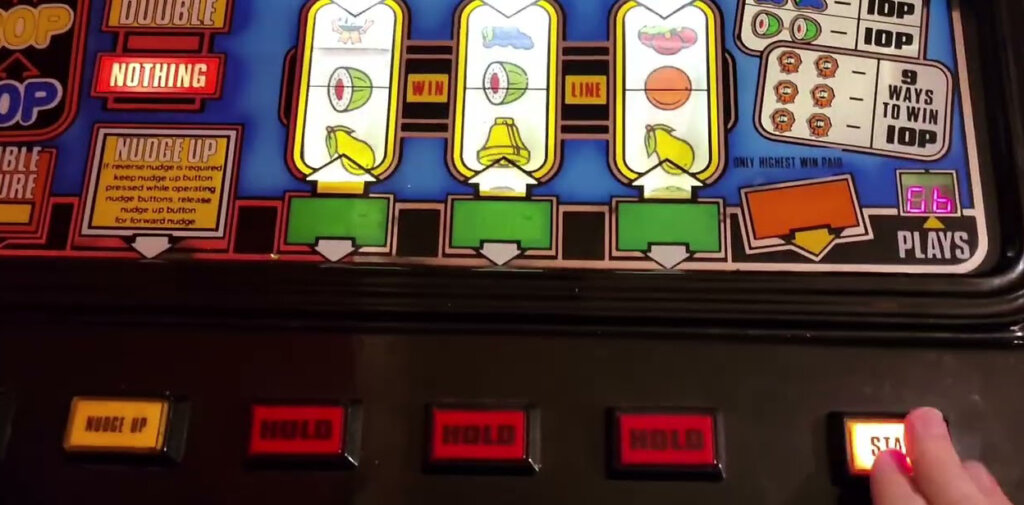
The HOLD button is one of the most iconic features of classic British fruit machines. It first appeared in the 1970s and early 1980s as manufacturers looked for ways to make machines feel more interactive while still working within strict UK payout and prize regulations. The idea was simple: after a spin, the player could choose to “hold” one or more reels in place, while the others respun — adding a light element of decision-making to the game.
By the 1990s, the HOLD button had become a defining part of the UK fruit-machine experience, appearing alongside other classic features like nudges, hi/lo gambles, feature trails, and cash ladders. Modern digital machines rarely use holds in the same way, but many retro-inspired slots still reference the mechanic because it’s so strongly linked to British arcade and pub gaming culture. The HOLD button represents a unique era when reel control, flashing buttons and teases were part of every session.
#3 Slot Fact: Modern Slots Can Have 100+ Bonus Combinations
Many modern slot machines — especially online video slots and complex UK B3 games — can generate over 100 different bonus variations when all possible combinations are counted. This doesn’t mean 100 separate bonus rounds, but rather 100+ unique outcomes or versions of those bonuses, created through reel setups, symbol arrangements, feature modifiers, and internal maths.
Here’s how that happens:
-
Scatter combinations can trigger different numbers of free spins (e.g., 6, 8, 10, 12, 15, etc.).
-
Multipliers can attach themselves to wins or wilds in multiple ways.
-
Different reel sets may be used depending on the trigger.
-
Collector-style bonuses (e.g., fishing, Hold & Spin, coin features) create dozens of possible setups.
-
Enhanced bonuses or “super bonuses” add their own variations.
-
Feature upgrades inside the bonus (extra spins, reel expansions, added wilds, sticky symbols, jackpots) multiply the number of possible outcomes.
-
Some UK B3 machines have ladder-based or trail-based features, where players can enter the same bonus at multiple value levels, each counted separately by the maths model.
Because of this layering, even a game that appears simple on the surface can mathematically generate a huge number of distinct bonus states. Many modern online slots comfortably exceed 100–200 possible bonus permutations, and some large-format casino titles go far beyond that due to progressive jackpots and multiple internal reel tables.
The reason for all this complexity?
It allows developers to balance volatility, RTP, and top-win potential while keeping the gameplay feeling varied. So when a player says they’ve “never seen that version of the bonus before,” they’re probably right — some bonus combinations are extremely rare and only appear once in tens of thousands of spins.
#4 Slot Fact: The First Video Slot Appeared in 1976
The world’s first video slot machine was created in 1976 by a Las Vegas–based company called Fortune Coin Co. Instead of using physical reels, the machine displayed digital reels on a modified 19-inch Sony TV screen, making it the first slot to rely entirely on electronic visuals rather than mechanical components. This was a huge leap forward for the industry — nothing like it had ever been seen on a casino floor.
The earliest version was installed at the Hilton Hotel in Las Vegas, but it didn’t take long for Nevada gaming regulators to get involved. Engineers had to add modifications, including a strengthened logic board and tamper-proof housing, before regulators approved it for wider casino use. Once cleared, the machine quickly attracted attention because it could do things mechanical reels couldn’t: add more symbols, introduce animations, and offer more complex payouts.
Fortune Coin Co. was later acquired by IGT (International Game Technology), who expanded on the idea and turned video slots into a global standard throughout the 1980s and 90s. That 1976 prototype laid the foundation for everything we see today — from HD online slots to multi-screen cabinets, bonus rounds, and features that would have been impossible on mechanical reels. It was the moment the slot machine moved from a physical device into the digital world.
#5 Slot Fact: Rainbow Riches Started as a Land-Based Machine
Rainbow Riches (one of my all time favourite slots) didn’t begin life online — it started as a land-based UK slot machine developed by Barcrest in the mid-2000s. The original version appeared in arcades long before online casinos became mainstream. It was a classic three-feature Barcrest-style machine, built around the iconic Road to Riches, Wishing Well, and Pots of Gold bonuses. These simple, bright, Irish-themed features helped it stand out instantly on gaming floors.
The machine became a runaway success, quickly spreading across UK arcades and betting shops, where it developed a loyal following. Its popularity grew because it struck the perfect balance between easy-to-understand gameplay, recognisable visuals, and true odds pot bonuses — long before the brand expanded into dozens of sequels. Only after the land-based version became a hit did Barcrest adapt Rainbow Riches for online play, eventually turning it into one of the biggest slot franchises in the UK.
Many players still remember the original cabinet: the bright green theme, the leprechaun, and the style of features that felt uniquely Barcrest. That land-based origin is why the series has such a strong identity today — it wasn’t made for online casinos first; it was made for arcade culture that defined UK gaming at the time.
#6 Slot Fact: Volatility Increases in the Bonus
In most modern slot games, the volatility increases dramatically once you enter the bonus round. This is intentional and built directly into the maths model. The base game is usually designed to produce regular small wins to keep gameplay flowing, but the bonus is where the slot’s highest variance — and biggest potential — is concentrated. As soon as the reels switch to the bonus reel set, the game’s internal maths changes: symbol weights, hit rates, multipliers and payout tables all shift to create a wider range of outcomes.
In practical terms, this means the bonus can swing far more wildly than the base game. On many popular online slots, for example, the biggest payouts (500x, 1,000x, 5,000x and beyond) are only possible during the bonus. UK B3 machines follow the same principle: the feature board, free spins, pots, or hi/lo ladders usually hold the machine’s top potential, while the base game stays relatively steady to balance the overall RTP. Because of this, some bonus rounds feel explosive and unpredictable — and some will pay very little — which is exactly how high-volatility maths works.
Developers use this structure for two main reasons:
-
Player expectation — people want the bonus to be the exciting part of the game.
-
Maths balancing — concentrating volatility in the bonus allows the base game to remain smoother and more controlled, while still offering a chance at big feature wins.
So when players say, “The bonus can go huge… or go dead,” they’re right. That’s how the maths is designed. The volatility genuinely ramps up the moment the bonus begins.
#7 Slot Fact: Hold & Win (Lock It Link) Popularity
The Hold & Win mechanic has become one of the most popular bonus formats in modern slots, spreading across both online casinos and UK land-based machines. Its rise began in the late 2010s, when several developers modernised the classic “hold-and-respin” idea into a fast, simple, high-volatility bonus. Instead of complex feature boards or multi-stage bonuses, Hold & Win focuses on a clean idea: lock symbols, fill the grid, and try to hit the top prizes.
The format became massively popular because it appeals to all types of players. It’s easy to understand, it has clear visual progress, and the expanding jackpots or coin values give a strong sense of momentum. Developers quickly adopted the mechanic in hundreds of games, using different grid sizes, coin modifiers, expanding reels, and jackpot tiers — but always returning to the same core structure of collecting symbols across three respins.
For UK players, the mechanic appears widely in online games but is also used in some modern B3-style machines where a “coin feature” or “cash collect respin” replaces the older-style reel or board features. Its popularity comes from predictability and excitement: players know exactly what they’re chasing, and the mechanic allows for a wide range of outcomes — from small base-level wins to high-volatility fills capable of triggering jackpots or top-end prizes.
In an industry full of complex mechanics, Hold & Win succeeded by keeping things simple, visual and consistent, which is why it has become one of the defining bonus styles of the last decade.
#8 Slot Fact: Hidden Reel Strips
Every slot machine — whether it’s a UK pub fruit machine, a B3 in an arcade, or an online video slot — uses hidden reel strips behind the scenes. These are the full lists of symbols arranged in a fixed order on each reel. What you see on the screen is only a tiny window of those strips; the rest is concealed. The machine’s RNG (Random Number Generator) picks a stop position on each reel, and the game then displays the three (or more) symbols around that stop, giving the impression of a spinning reel.
What most players don’t realise is how important these hidden strips are to a game’s design. Developers carefully shape the strips — deciding where wilds appear, how often bonus symbols land, and how frequently big wins line up. A symbol that looks “common” on the screen might actually appear only a few times on the full strip, while small symbols usually appear far more often. This is how the machine controls hit frequency, volatility and RTP. Even on advanced video slots with animations, the underlying maths still relies on these invisible reel tables.
On multi-reel or complex games, each reel may have a different strip length — sometimes 30, 50, 80 or even over 100 symbols long. Some games also switch to alternate reel strips during the bonus, which is why certain symbols suddenly become more common or why huge wins are only possible inside the feature. Although players only ever see a small slice of the reels, it’s the hidden strips that determine almost everything about how a slot behaves.
#9 Slot Fact: RTP vs Volatility
RTP and volatility are two of the most important parts of slot design, but they describe completely different things. RTP (Return to Player) is a long-term statistical percentage showing how much of all money played is expected to be returned over millions of spins. For example, a slot with 95% RTP will, over huge sample sizes, return £95 for every £100 wagered — but this has no meaningful impact on any single session. RTP shapes the long-term balance of wins versus losses, and it is fixed by the game’s certified maths model.
Volatility, on the other hand, describes how the game pays out rather than how much it pays out over time. High-volatility slots concentrate most of their RTP in rare but potentially large wins, leading to long dry spells punctuated by big bonuses. Low-volatility slots spread their RTP across more frequent, smaller wins, giving smoother and more predictable play. Two slots can have identical RTPs — say 94% — but behave completely differently depending on their volatility profile.
In simple terms:
-
RTP is the long-term return.
-
Volatility is the ride you take to get there.
A low-volatility 94% slot might feel steady and consistent, while a high-volatility 94% slot might feel brutal until it suddenly explodes with a big feature. Both are mathematically accurate — they just distribute their payouts in very different ways. This is why players often say a slot “feels tight” or “feels hot” even when RTP is the same: it’s the volatility doing the heavy lifting, not the payout percentage.
#10 Slot Fact: Wild Symbols Were First Introduced in the 1940s
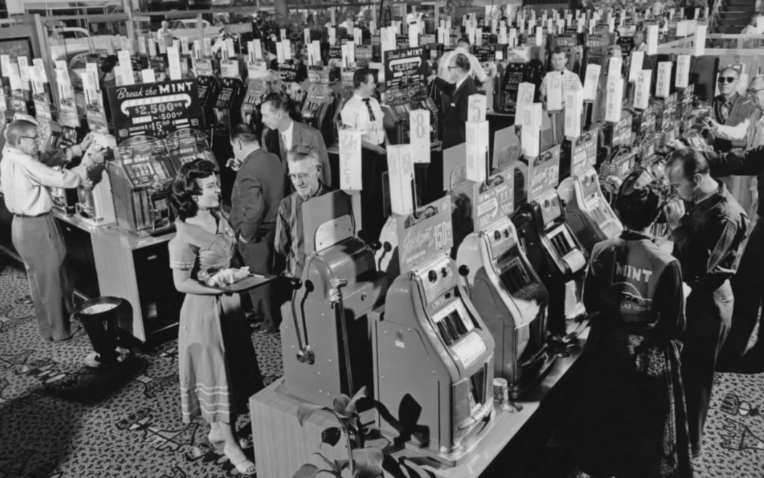
The wild symbol, now one of the most common features in slot games, can be traced back to the 1940s. It first appeared on early electromechanical machines produced by companies like Bally, who were experimenting with new reel designs and more varied gameplay. These machines didn’t have bonus rounds or free spins yet, so adding a symbol that could substitute for any other symbol was a simple but clever way to create more winning combinations.
The idea came from traditional card games, where “wild cards” could stand in for any value. Slot manufacturers adapted the concept to reel strips, typically using a special logo or symbol that the player would instantly recognise. These early wilds appeared on physical, printed reel strips and were deliberately spaced out so they felt rare — exactly the way wilds behave in today’s high-volatility games.
As technology advanced through the 1960s–1980s, wild symbols became a standard part of machine design. When video slots arrived in the 1990s, wilds evolved into expanding wilds, sticky wilds, walking wilds, stacked wilds and multiplier wilds. But all of that variation comes from a single early idea introduced over 80 years ago on simple 3-reel machines.
The wild symbol is now one of the defining features of modern slots — yet it started as a small innovation designed to make basic mechanical machines a little more exciting.
Bonus Fact! #11 December Has the Most Slot Releases
December is traditionally one of the busiest months for slot releases, both online and in UK land-based markets. Developers time many of their biggest launches for the end of the year because player activity rises sharply during the holiday period. Online casinos see increased traffic, arcades and AGCs get busier, and players generally have more leisure time — all of which makes December a prime window for new titles.
Another reason is scheduling. Slot providers usually work on yearly release calendars, and anything that hasn’t launched by autumn often gets pushed into December to meet annual targets. This creates a pile-up of final-quarter releases, with many studios dropping multiple new games in the same month. Seasonal themes also play a role: Christmas and winter-themed slots are hugely popular, so developers deliberately stack December with festive versions of their biggest franchises.
Although new slots are released all year round, December consistently sees a surge — often the highest volume of launches for the entire year — making it a key month for both players and game studios.