
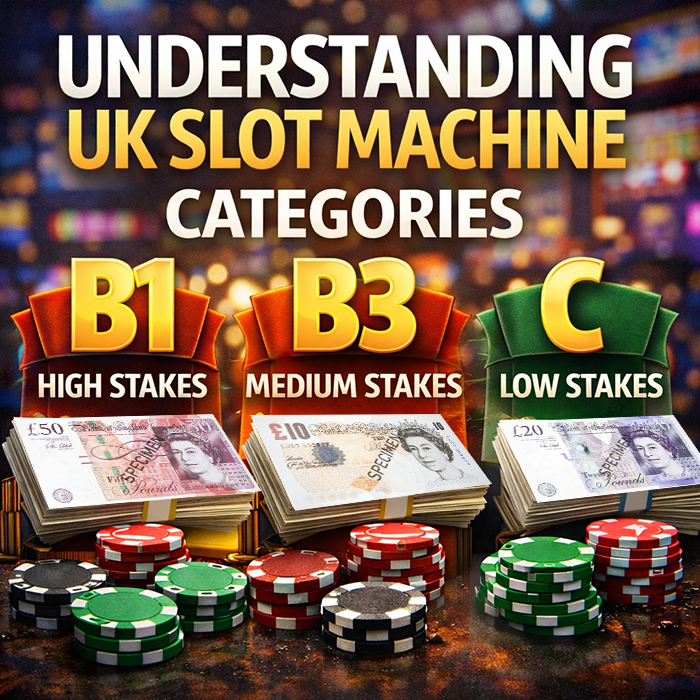
Understanding UK Slot Machine Categories: B1, B2, B3, B3A, B4, C and D Explained
-
UK slot machines are divided into categories such as B1, B3, C and D, each with strict legal limits on maximum stake and maximum jackpot.
-
Higher-category machines offer larger jackpots and faster balance swings, but are restricted to casinos and adult-only gambling venues.
-
Lower-category machines have smaller jackpots and lower risk, and are commonly found in pubs, clubs, and amusement arcades.
In Great Britain, slot machines (and other gaming machines) are legally grouped into categories that set the maximum stake and maximum prize, and also limit where those machines can be sited. These categories are part of the framework the Gambling Commission uses to control risk by venue type, so a machine’s “feel” in a pub, arcade, or casino is heavily shaped by the category it’s operating under.
Category B1 is the top end of what most people think of as casino slots. The maximum stake is £5 and the maximum prize is £10,000, with an option for a linked progressive jackpot up to £20,000 on a premises basis. In plain terms, these are the machines designed for the biggest headline wins, and they’re restricted to casino settings.
Category B2 is defined at a maximum stake of £2 and a maximum prize of £500. This category is widely associated with betting-terminal style play (often discussed in the context of FOBTs), and it is permitted in venues such as casinos and betting premises (and certain track settings). If you’re thinking of fast, high-intensity terminal gambling rather than traditional pub fruit machines, you’re usually in B2/B3 territory.
Category B3 also has a maximum stake of £2 and a maximum prize of £500, and it’s one of the categories most people will encounter in adult-only gambling environments. B3 machines are permitted more widely than B1, including casinos, betting premises, adult gaming centres, and bingo premises. When people talk about “£500 jackpot slots” on the high street, B3 is very often the legal category behind that experience and where most of my YouTube slot play is filmed.
Category B3A is where confusion often creeps in, so it’s worth being precise. B3A machines have the same headline limits as B3—£2 max stake and a £500 max prize—but their permitted location is tightly restricted: they are for members’ clubs or miners’ welfare institutes only, typically with strict entitlement limits on how many can be sited. In other words, B3A isn’t “a lower-stake B3”; it’s a club-restricted category with the same stake and prize ceiling.
Category B4 steps the prize down slightly while keeping the same maximum stake. The maximum stake remains £2, but the maximum prize is £400. B4 can appear across a broad range of adult or regulated venues (including clubs, bingo premises, and adult gaming centres), and in practice it tends to sit just below B3 in terms of headline win potential.
Category C is the classic pub and club fruit machine category that many UK players recognise. The maximum stake is £1 and the maximum prize is £100. You’ll commonly see Category C machines in pubs and clubs, and they’re also permitted in a range of other licensed gambling venues. The key point is that if it’s a “normal” fruit machine in a local pub with a £100 top prize, Category C is usually what’s governing it.
Category D covers the lower-stake end of the market that’s most associated with arcades and family entertainment settings, and it’s split into sub-types depending on whether prizes are money, non-money, or a mix. As examples, a money-prize Category D machine is capped at 10p stake and a £5 cash prize, while crane grab machines can go up to £1 stake with a £50 non-money prize, and coin pushers can go up to a 20p stake with a £20 maximum prize (with limits on how much of that can be cash). This is why arcades can feel so varied: many different “amusement-style” machines sit inside the same Category D umbrella, but with different sub-limits.