
-
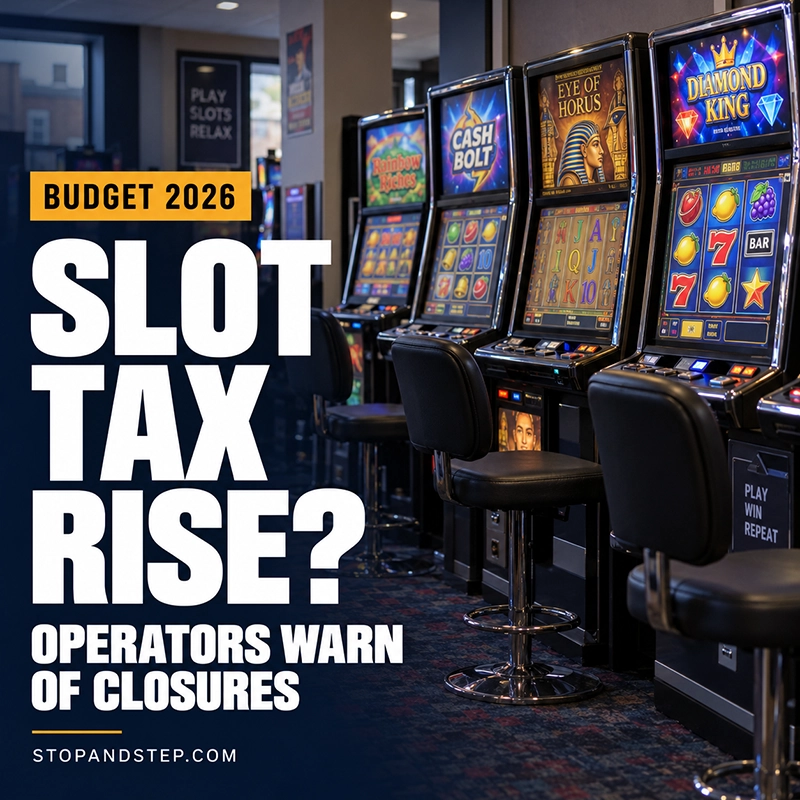
Machine Games Duty could rise in the 28 October Budget, but no increase is confirmed.
-
Betfred, JenningsBet and Rank have warned that higher duty could threaten shops, venues and jobs.
-
Latest reports suggest a possible 25% rate, rather than the previously discussed 40%.
Machine Games Duty rise: betting shops and casinos warn of closures ahead of Budget
21 October 2026
Britain’s land-based gambling operators are warning that an increase in Machine Games Duty could force further venue closures and put jobs and investment at risk ahead of the Budget on 28 October.
Much of the industry’s campaigning has focused on the possibility of the duty rising to 40%. However, reporting published on 21 October suggests the Government may instead increase the standard rate from 20% to 25%. Neither figure has been confirmed as government policy.
For customers of betting shops, casinos and adult gaming centres, the outcome could affect the availability of local venues and operators’ willingness to invest in their businesses.
What is Machine Games Duty?
Machine Games Duty, commonly called MGD, is charged on the net takings from taxable gaming machines: the money received from players minus prizes paid out.
HMRC currently lists three rates: a lower rate of 5%, a standard rate of 20% and a higher rate of 25%, depending on the machine’s maximum stake and prize. It is therefore misleading to describe MGD simply as a tax on an operator’s final business profit: rent, wages and other operating costs still have to be covered.
For a machine paying the standard rate, increasing MGD from 20% to 40% would double the duty charged on unchanged net takings. A move to 25% would represent a five percentage point increase, or a 25% increase in the duty bill.
Which companies have warned about closures?
Betfred has issued one of the clearest warnings. Co-founder Fred Done said in September that the company’s modelling suggested a 40% MGD rate would force it to close 495 shops, approximately 45% of its estate at that point. This was a conditional forecast, rather than an announcement that those closures would happen.
More recent reporting suggests a smaller increase would also create difficulties. According to the Racing Post on 21 October, Betfred estimates that a 25% rate would make 284 of its remaining 1,094 shops loss-making, putting 1,420 jobs at risk. Becoming loss-making does not automatically mean a shop will close, but the figures illustrate the pressure the company says it would face.
JenningsBet has also warned of substantial consequences. Chief executive Greg Knight told The Times that doubling machine gaming duty would make 100 of its 212 shops unviable and could threaten the company’s survival. These are the operator’s estimates of the impact of a 40% rate, not confirmed closure plans.
Rank Group, which operates Grosvenor Casinos and Mecca Bingo, has warned that a rise to 40% could put around a third of its venues at risk. Reports of its warning also identified approximately 2,000 jobs as potentially affected. No list of future closures has been confirmed in that warning.
Why is a higher rate being proposed?
The Social Market Foundation think tank has called for MGD on Category B machines to rise to 40%, arguing that taxation should better reflect gambling-related harm.
Its modelling estimates additional annual revenue of between £275 million and £458 million. Crucially, its recommendation targets Category B machines, rather than a blanket increase covering every fruit machine. The proposal would protect lower-category machines used in pubs and other hospitality venues. It remains a think tank recommendation, rather than an announced Treasury measure.
The Betting and Gaming Council disputes the economic case. It cites EY analysis suggesting that a 40% rate could lead to between 690 and 1,470 additional betting shop closures and between 28 and 34 casino closures. Those figures are modelling cited by an industry body opposing the increase; they should not be treated as inevitable outcomes or added to individual operators’ warnings.
What could it mean for arcade and slot players?
The scope of any change will matter as much as the headline rate. A measure targeting Category B machines would be particularly relevant to businesses offering B3 slots, while its treatment of Category C pub machines would need to be checked separately.
Higher duty would leave affected operators with less money from unchanged machine takings to cover their costs. That could put pressure on venue refurbishments, machine purchases and marginal locations. These are potential commercial consequences, rather than confirmed decisions about particular cabinets, games or arcades.
Investment concerns already extend beyond the gaming floor. The Night Time Industries Association reports that London’s Hippodrome Casino has put a developed £6 million rooftop expansion on hold amid fiscal uncertainty. That is an investment delay, not a warning that the casino itself will close.
For now, the distinction is clear: operators have issued serious warnings, but a 40% Machine Games Duty rate has not been announced. The Budget will determine whether duty changes, which machines are affected and when any new rules take effect.