
10 Amazing Slot Machine Facts!
#1 Slot Fact: The oldest slot machine was invented in 1894
The very first true slot machine is generally credited to Charles August Fey, a San Francisco mechanic who built his prototype in 1894–1895. Fey’s earliest models were simple, three-reel machines with mechanical drums and automatic payouts—something no machine had reliably achieved before. Although the more famous Liberty Bell arrived a few years later and is often mistakenly labelled as the first, Fey’s earlier 1894 design was the real starting point for what would become the global slot industry.
This early machine used rotating drums with symbols such as horseshoes, stars and bells. It accepted a coin, operated with a lever, and paid out coins mechanically—revolutionary technology at the time. These machines appeared in bars, cigar shops and saloons across San Francisco, quickly becoming a popular novelty. Fey’s invention paved the way for the fruit machines of the early 1900s, the electromechanical machines of the 1960s, and today’s digital slots with HD screens, bonus features and complex RNG algorithms. Even though 1894 feels like a lifetime ago, the core idea—a simple game of chance triggered by a lever—set the template for everything that followed.
#2 Slot Fact: Fruit Machines Paid Out Sweets
Early fruit machines didn’t pay out money at all — they paid out sweets, mints and chewing gum. This was mainly due to strict anti-gaming laws in the early 1900s, particularly in the United States. Manufacturers got around these restrictions by marketing their machines as “trade stimulators” rather than gambling devices. When a player lined up fruit symbols like cherries, lemons or oranges, the machine would dispense the corresponding flavour of gum or sweets instead of a cash prize.
The fruit symbols we still see today came directly from this workaround. The famous BAR symbol actually originated from the Bell-Fruit Gum Company logo, which appeared on early machines that dispensed their products. Over time, these sweet-dispensing machines evolved into cash-paying slots as regulations changed, but the fruit symbols survived long after the sweets disappeared. That’s why even modern digital slots still use cherries, lemons and bars — they’re a visual legacy from the days when the “payout” was a stick of gum rather than coins.
#3 Slot Fact: Nudges Were a UK Invention
The nudge feature — now a classic part of British fruit machines — was created in the UK during the late 1970s and early 1980s. At the time, UK regulations limited payouts and prize values, which encouraged manufacturers to innovate in other ways to keep machines engaging. The result was the introduction of nudges, a mechanic that allowed players to move a reel up or down by one position after a spin. This added a small element of strategy and player interaction, making the machines feel more skill-based while still operating within strict gaming rules.
Nudges quickly became a signature feature of British pub fruit machines, often combined with holds, feature trails, cash ladders and quirky bonus boards. They gave players just enough control to feel involved, and the sight of a nearly-lined-up win became part of the excitement. Although digital slots worldwide now use all sorts of bonus mechanics, the traditional nudge remains distinctly British — a feature born from UK regulation, refined in pubs and arcades, and still instantly recognisable to anyone who grew up playing classic machines.
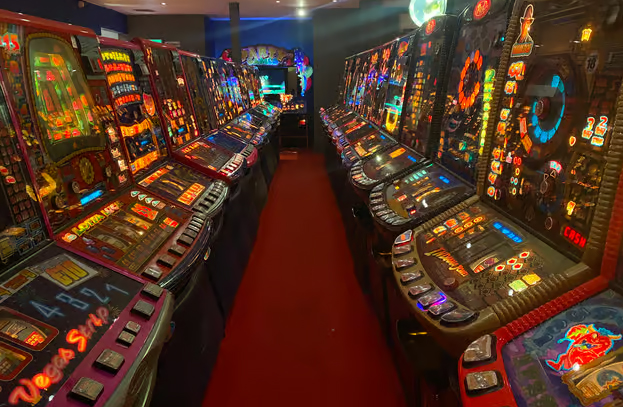
#4 Slot Fact: £500 B3 Jackpot Limit
In the UK, the familiar £500 jackpot comes from the regulations that define Category B3 gaming machines. These machines are allowed in adult gaming centres (AGCs) and bingo halls, and the law sets a strict maximum jackpot of £500 with a maximum stake of £2 per spin. This limit has been in place since 2009, when the Gambling Act 2005 was fully implemented and the B-category system was standardised.
The B3 cap has shaped the design of modern UK slot machines. Developers build game mechanics, features and prize ladders specifically around the £500 ceiling, which is why so many bonuses top out at that number. Although there have been industry discussions about increasing the limit — especially with rising costs, inflation and comparisons to online slot payouts — the B3 jackpot has remained unchanged for well over a decade. For anyone who plays in arcades today, that £500 figure has become part of the landscape, defining what a “big win” looks like on a high-street slot machine.
#5 Slot Fact: Rainbow Riches Has 30+ Versions
Rainbow Riches is one of the longest-running and most expanded slot series ever created, with over 30 different versions released since the original slot machine launched in the mid-2000s. Developed by Barcrest (later SG Gaming / Light & Wonder), the first Rainbow Riches had three iconic features — Road to Riches, Wishing Well, and Pots of Gold. It became so popular across bookies, arcades and bingo halls that Barcrest began turning it into a full franchise.
Over the years, new versions have added Megaways, Pick ’n’ Mix, Pure Gold, Drops of Gold, Reels of Gold, Rainbow Riches Free Spins, Rainbow Riches Home Sweet Home and many others — each introducing different reel setups, bonus mechanics and styles. Some have been designed for arcades (Category C or B3), others for online play, and some for a short time were made exclusively for casinos.
Despite all the variations, every version shares the same core identity: bright green fields, gold pots, Irish-themed charm, and the instantly recognisable leprechaun mascot. It’s one of the few slot series where the brand alone is strong enough to guarantee a new game’s popularity, and it continues to grow nearly 20 years after its debut.
#6 Slot Fact: Fishin’ Frenzy Is 10 Years Old
Fishin’ Frenzy has now passed the 10-year mark, with the first widely released version launching online in 2014. The game was developed by Blueprint Gaming, who brought the fisherman, the simple 5-reel layout and the iconic “catch the fish during free spins” mechanic to online casinos. This 2014 Blueprint release is the version that made the brand famous and is the foundation for every sequel players know today.
Behind the scenes, the game’s concept and math model are linked to Reel Time Gaming (RTG), who originally designed many of the classic land-based slots that Blueprint later adapted for online play. That means Fishin’ Frenzy has design roots in RTG’s style, but the first widely recognised version, and the one that established the franchise, was Blueprint’s 2014 online release.
The success of that release transformed Fishin’ Frenzy into a full franchise. Over the past decade it has expanded into arcades, pubs and AGCs, and spawned versions such as Megaways, The Big Catch, All Stars, Even Bigger Catch, Prize Lines, and several Christmas editions. Despite all the variations, the fisherman-and-fish bonus remains the heart of the series — a simple mechanic that has kept the game popular for a decade.
#7 Slot Fact: Bonus Buy Is Banned in the UK
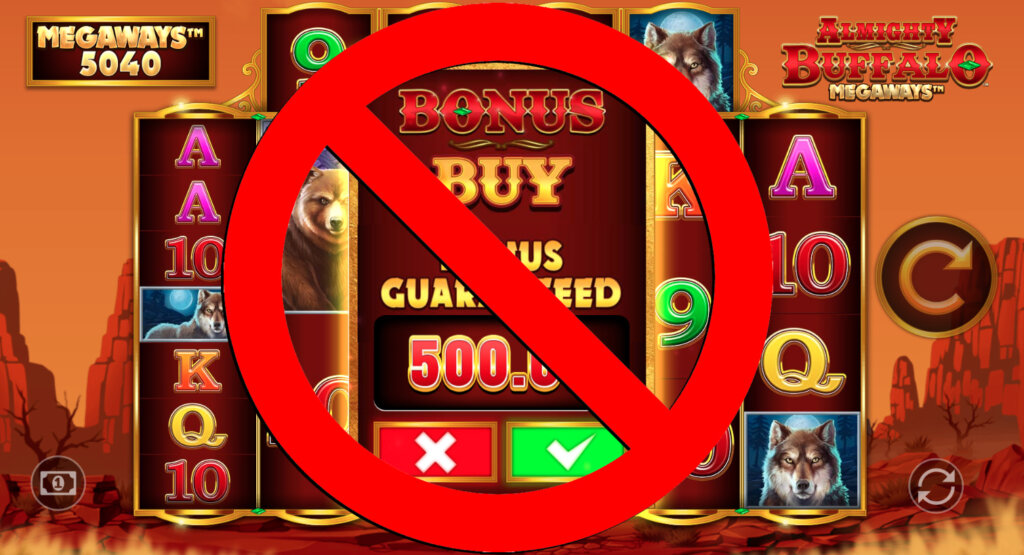
The “Bonus Buy” feature — where players can pay a fixed amount to trigger a bonus instantly — is not allowed on UK-regulated online slots. The ban was introduced by the UK Gambling Commission in 2021, as part of a wider update to slot design rules aimed at reducing high-risk behaviours. Bonus buys typically cost anywhere from 50x to 200x a stake, and some games abroad even go higher, which the Commission viewed as encouraging unsafe spending patterns. As a result, any slot released in the UK market must have the feature removed or entirely redesigned.
To comply with the rules, developers create separate UK versions of games. These versions remove button options like “Buy Feature” or “Buy Bonus”, and the game’s maths is adjusted so that bonuses can only be triggered naturally through standard play. Some developers replace the buy option with enhanced spins or more frequent base wins, but they are not allowed to offer paid access to bonus rounds.
Outside the UK, bonus buys remain extremely common in Europe, the US and other regulated markets, and many well-known games have two versions: a global build with Bonus Buy, and a UK-compliant build without it. The UK ban has significantly shaped how modern online slots are designed, ensuring every feature must be accessible through normal gameplay rather than direct purchase.
#8 Slot Fact: Some Bonuses Are So Rare They Can Be Close to 1 in 50,000 Spins
In modern slots — both online and in UK arcades — bonus features are controlled by a mathematical model built around RTP, volatility, and hit frequency. While most bonuses are designed to trigger reasonably often, usually every 1 in 80 to 1 in 300 spins depending on the game, some slots include extremely rare features. These aren’t the regular bonus rounds — they’re special versions designed to be difficult to hit, such as:
-
Top-tier features inside feature ladders
-
Max-potential bonus variations
-
Special “super bonuses” only awarded from a secondary trigger
-
Progressive bonus events
-
Jackpot-entry bonuses on some games
For these types of advanced features, it’s completely normal for hit rates to become thousands, or even tens of thousands of spins apart.
Manufacturers don’t publish exact odds for individual bonus types, but industry maths documents and testing-lab data confirm that rare feature triggers can easily reach 1 in 10,000–50,000 spins depending on the design. This is especially true in high-volatility online slots and complex B3 trail-based machines, where the “normal” bonus is common but the enhanced or super version is intentionally ultra-rare.
A few examples of where these extreme odds occur (without naming specific unpublished odds):
-
Games with multi-tiered bonus ladders where the top tier is designed to be hit extremely infrequently
-
Slots where a standard bonus is common, but a “Super Bonus” requires a secondary trigger within the bonus
-
Machines that offer a chance at a progressive jackpot feature accessed only from rare bonus combinations
-
Slot models with very high maximum win caps, where the big-potential mode appears far less frequently than the normal bonus
These rare bonuses don’t guarantee big wins — they simply open the door to the game’s highest potential. The infrequency is part of the maths balancing needed to maintain the published RTP.
So while the regular bonus might appear reasonably often, the rarest features in some modern slots can sit in the 1 in tens-of-thousands range, which is why some players spend years chasing a feature they’ve never seen.
#9 Slot Fact: Pint Tokens in Pubs
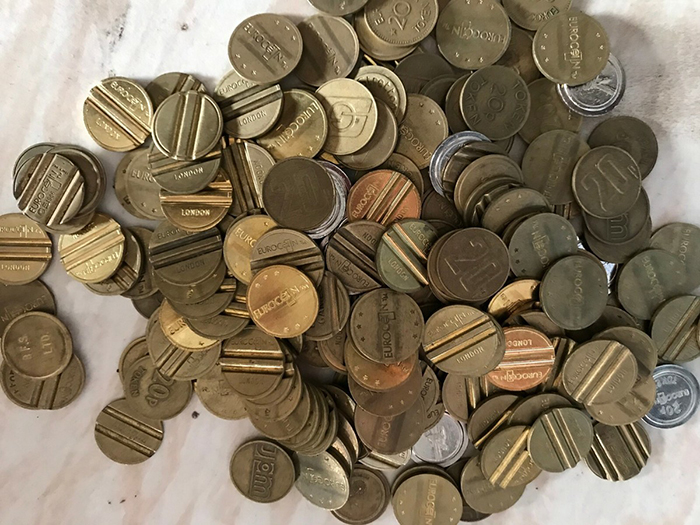
Before modern regulations standardised payouts, many British pubs used pint tokens as an alternative prize on their fruit machines. This was most common from the 1960s through the early 1990s, particularly on early electromechanical and low-stake amusement machines. Instead of paying higher amounts of cash, some machines rewarded players with a small metal token that could be exchanged at the bar for a free pint, half-pint, or sometimes a soft drink.
These tokens served two purposes. First, they helped keep machines within local payout limits, which were far stricter than today’s B3 rules. Second, they acted as a clever way for pubs to encourage customers to stay longer and spend more. The idea was simple: win a token → collect a drink → keep playing.
By the mid-1990s, changes in licensing laws and tighter gambling regulation meant pint tokens largely disappeared. Machines moved toward purely cash-based payouts, and later toward fully electronic ticket systems. But many long-time players still remember the era of pulling a win, hearing the clatter of a metal token, and heading straight to the bar for a free pint — a very British chapter in fruit-machine history.
I actually remember exchanging tokens for Woolworths vouchers!
#1 0 Slot Fact: Community Slots
Community slots — often called community play or linked slots — are machines where multiple players share the same bonus round or feature event. They became popular in the UK in the late 2000s and early 2010s, especially in seaside arcades. Instead of each machine running independently, a group of terminals connects to a single central game controller that can trigger a shared feature for everyone playing at the same time.
One of the most recognisable examples in the UK is Black Knight Community, where all active players enter the same free-spin round together. Other games follow the same idea: bonuses, cash pots or wheel spins can activate simultaneously for everyone linked to the bank of machines.
The goal of community slots is to create a more social experience and a surge of excitement when a feature triggers. Players often cheer when someone else activates a shared bonus, because they benefit too. This design also fits neatly within UK machine regulations: the RNG still treats each player separately for payouts, but the event itself is shared.
Today, community slots remain a niche but memorable part of UK machine culture — especially in AGCs — offering a rare moment where a room full of players experience the same feature together.
Bonus Fact! #1 1 UK Fruit Machines Commonly Run at Around 92% RTP
UK pub and arcade machines — especially Category B3 — typically run at an RTP of around 90%–92%, but this is industry practice, not a legal requirement. Unlike many other countries, the UK Gambling Commission does not set a fixed minimum RTP for land-based machines. Instead, the rules require that all games are fair, open, and independently tested to ensure they perform exactly as the manufacturer declares.
Because operators and manufacturers want games to feel competitive and enjoyable, most B3 machines end up in the low-90% range. Category C machines (the classic pub £100 jackpot games) often sit a little lower, commonly 88%–90%, while some club and amusement categories can be even lower depending on the model. Online slots, by contrast, usually run far higher — typically 94%–97% — because they don’t have the overheads of land-based machines.
The key point is that RTP in UK venues is set by design choice, not by law. A machine must match its certified payout profile, but there is no legal minimum. So when players see B3s hovering around the 92% mark, that’s because it’s become the standard manufacturers choose — not because the regulations force it.