

-
How small RTP differences affect slot play and balance lifespan
-
The real impact of 92% vs 94% RTP on slot behaviour
-
RTP differences between AGCs, betting shops, and motorway services
Slot RTP Explained: Why Small Percentage Differences Make a Huge Difference to How a Slot Machine Plays
Most slot players have heard the term RTP (Return to Player). It’s often shown as a percentage in the help screen, usually somewhere in the low-to-mid 90s on UK machines.
But here’s the truth:
RTP isn’t just a number, it’s one of the biggest reasons why some machines feel “playable” and others feel like money pits.
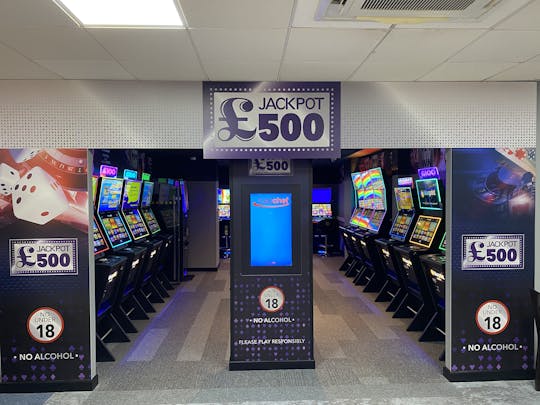
And nowhere is this more noticeable than when you compare Adult Gaming Centres (AGCs) with betting shops and motorway service machines.
On paper, the difference in RTP might look tiny.
In real play, it can completely change how long your money lasts and how enjoyable the session feels.
Let’s break it down properly, in plain English.
What RTP Actually Means (Without the Jargon)
RTP is the long-term average of how much a slot returns to players.
-
A 94% RTP slot returns £94 for every £100 staked (over a very long time)
-
A 92% RTP slot returns £92 for every £100 staked
That missing £2 doesn’t vanish at the end of the session.
It’s taken during play, spin by spin, through:
-
Fewer small wins
-
Longer losing streaks
-
Rarer or weaker bonuses
That’s why RTP affects feel, not just maths.
Why UK Arcade RTP Caps Matter
In UK arcades, RTP is usually capped at a maximum of 94%. There are a few examples of higher, but it is very rare.
That means:
-
94% is generally the best-case scenario
-
Anything below that is noticeably harsher
So when you’re comparing slot machines, you’re not choosing between 96% and 98% like online slots, you’re choosing between “playable” and “draining”.
At these lower RTP levels, every single percentage point matters more.
AGCs vs Betting Shops vs Motorway Services
This is where things get interesting.
Adult Gaming Centres (AGCs)
AGCs are usually:
-
More competitive
-
Focused on longer player sessions
-
More reliant on repeat custom
As a result, AGC machines tend to sit closer to the upper end of the RTP range.
In practice, that usually means:
-
More frequent small wins
-
Better balance recycling
-
Sessions that feel fairer and last longer
Betting Shops
Betting shop machines are different.
They’re often:
-
Secondary to the main business (sports betting)
-
Played in shorter, more impulsive sessions
-
Designed for faster turnover
Because of that, RTPs in betting shops are typically set lower than AGCs.
What players feel:
-
Faster balance drop
-
Longer stretches of nothing
-
Fewer “saving” wins that keep you going
This is why many players say:
“Betting shop machines just rinse you”
They’re not imagining it.
Motorway Services
Motorway service machines are usually the lowest of the lot.
Why?
-
Captive audience
-
No competition nearby
-
Very short, convenience-style play
These machines are often set:
-
At the bottom of the RTP range
-
For maximum turnover in minimal time
What that means in reality:
-
£20 can disappear very quickly
-
Bonuses feel rare or underwhelming
-
The machine feels “dead” even when it’s technically working as designed
Why a 2% RTP Difference Can Feel Massive in Real Play
Let’s use a realistic example.
£1 per spin, 1,000 spins
|
RTP |
Expected Return |
Expected Loss |
|---|---|---|
|
94% |
£940 |
£60 |
|
92% |
£920 |
£80 |
That’s a £20 difference.
But here’s the key point:
Most sessions don’t reach 1,000 spins.
They end when the balance hits zero.
That £20 difference usually shows up as:
-
20 fewer £1 wins
-
Or 10 fewer £2 hits
-
Or one bonus that never quite arrives
Those missing moments are what make a slot feel brutal.
Where the RTP Is Actually Removed From
Lower RTP doesn’t usually mean everything pays less. Instead, the game quietly removes money from specific areas.
1. Fewer Small Wins
Small wins are what:
-
Stop balances collapsing
-
Let you survive dead patches
-
Keep the session enjoyable
Lower RTP machines often reduce these first.
You still get spins.
You still get animations.
You just get fewer returns.
2. Rarer Bonuses
Many lower RTP machines:
-
Keep the same bonus potential
-
But reduce how often the bonus triggers
So when it does land, it looks fine — but you wait much longer to see it.
That’s why players often say:
“It never bloody bonuses”
3. Weaker Average Bonuses
Sometimes the bonus triggers just as often, but:
-
More minimum wins
-
Fewer mid-range results
-
Big wins still exist, but are rarer
The machine stays legal, but feels stingy.
Why Short Sessions Make RTP Even More Important
RTP only truly averages out over huge numbers of spins.
Most players don’t play like that.
Typical real-world sessions:
-
£20–£50 in a betting shop
-
£50–£100 in an AGC
-
15–30 minutes at most
In short sessions:
-
RTP differences hit harder
-
There’s less time for luck to turn
-
Lower RTP means less margin for survival
This is why a 94% machine can feel “kind” while a 92% machine feels hostile, even if volatility is similar.
Same Volatility, Different Experience
Two machines can both be labelled:
And still feel completely different.
Why?
Because:
-
Volatility = how wins are spaced
-
RTP = how much money exists to be paid back
Lower RTP means:
-
Same structure
-
Less money inside it
Think of it like two identical games, one just quietly removes a few winning outcomes.
Why Players Instinctively Know When a Machine Is Tight
Players don’t need maths to notice:
-
How fast a balance drops
-
How often a machine gives you hope
-
Whether it ever lets you recover
That’s why players consistently say:
-
AGC machines feel fairer
-
Betting shop machines feel harsher
-
Motorway service machines feel ruthless
They’re responding to RTP, even if they don’t know the number.
The Bottom Line
A small RTP difference doesn’t change the rules of a slot.
It changes:
-
How long your money lasts
-
How often you get relief wins
-
Whether the session feels enjoyable or punishing
At arcade-level RTPs:
-
94% feels playable
-
92% feels draining
-
Anything lower feels unforgiving
So next time a machine feels “tight”, it probably is and not because it’s broken, but because a few missing percentage points have quietly changed the entire experience.